
If you’re trying to figure out how to store fishing rods in a garage, the biggest mistake is treating them like any other long object that can simply be leaned into a corner.
Fishing rods are light, long, and easy to damage in surprisingly ordinary ways. One tackle box falling against a rod tip can end a rod’s life. Guides can bend when rods are piled together. Reel handles get scratched. Hooks snag neighboring rods. And a group of rigged rods leaning against a wall eventually seems to turn itself into a tangled mess.
Good garage fishing rod storage doesn’t need to be complicated. The goal is to keep each rod supported, prevent rods from banging into one another, protect vulnerable components, control moisture, and make the combinations you use most often easy to grab.
Here’s how to set up your garage so your fishing gear stays protected between trips.
1. Don’t Lean Fishing Rods Loose in a Corner
Almost every angler has done it.
You come home tired, unload the truck or boat, and lean six rods against a garage wall with the intention of putting them away later.
The problem is that rods stored this way are easy to knock over. They can slide sideways, become tangled with neighboring rods, or end up underneath other equipment.
Rod tips are especially vulnerable. They're designed to flex while fighting a fish, but they aren't designed to have a cooler, ladder, bicycle, tackle box, or lawn tool fall against them.
If rods need to stay in the garage regularly, give them a dedicated storage location instead of whichever corner happens to be empty.
2. Use a Rod Rack for Long-Term Garage Storage
A dedicated fishing rod rack is one of the simplest ways to organize multiple rods.
The important part isn't necessarily whether you choose a vertical or horizontal rack. It's whether the rack supports the rods properly and keeps them separated.
Vertical Fishing Rod Storage
Vertical racks can work well when floor space is available but wall space is limited.
Make sure the ceiling is high enough for your longest rods and that rod tips aren't being pushed into the ceiling.
Place the rack somewhere that isn't part of a normal walking path. You don't want delicate rod tips extending into an area where people are carrying boxes, tools, bicycles, or other equipment.
Horizontal Fishing Rod Storage
Horizontal wall-mounted racks can be a good choice when you want rods off the garage floor.
Use enough support points that rods aren't hanging awkwardly or being forced to bend while stored.
Horizontal storage can also make it easier to visually identify different rod-and-reel combinations without pulling several rods from a vertical rack.
Whichever method you use, avoid jamming rods tightly together.
A rod rack solves the organization problem, but the rods can still rub against one another if they're packed too closely.
3. Protect Rods From Other Rods
One of the overlooked sources of fishing rod damage is other fishing rods.
Put ten rigged rods in a rack and you have ten sets of guides, reel handles, blanks, lines, hook keepers, and possibly lures sitting inches apart.
Move one rod carelessly and its guides can catch on a neighboring rod. A reel handle can scrape another reel. Braided line can wrap around a guide.
Using individual rod protection helps keep those combinations separated.
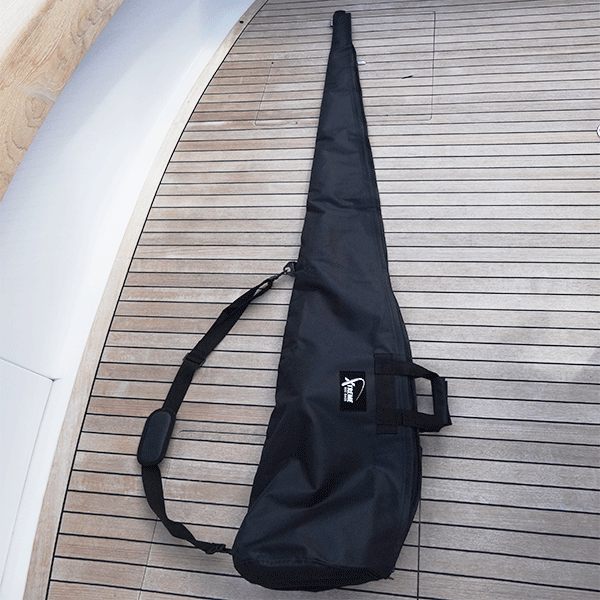
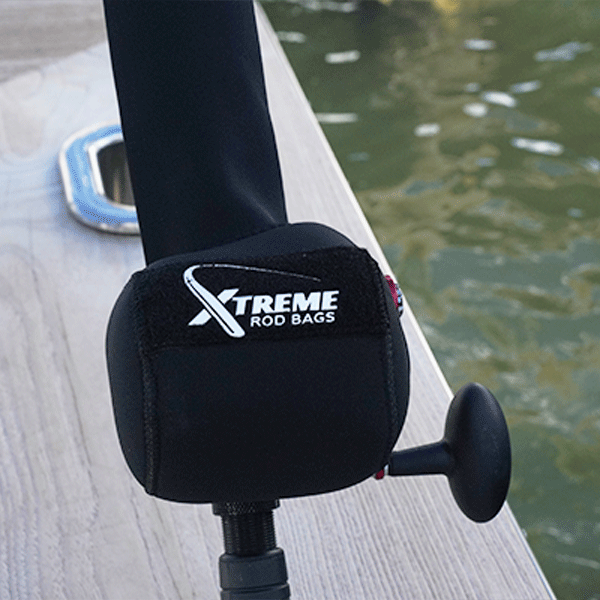
For rods and reels you want fully covered between trips, Rod-Bags.com offers both a Canvas Series Rod & Reel Bag and a complete Neoprene Series with covers for different fishing setups.
A cover doesn't replace a properly designed rack, but the two work well together: the rack organizes the rods while the cover helps keep individual combinations separated from surrounding equipment.
4. Store Rods With Reels Attached When It Makes Sense
For rods you fish regularly, there's usually little reason to remove the reel every time the rod goes back into the garage.
Keeping your favorite combinations assembled saves time before the next trip and lets you organize rods by technique.
You might have separate setups for:
-
Topwater
-
Crankbaits
-
Jigs
-
Soft plastics
-
Trolling
-
Live bait
-
Bottom fishing
-
Inshore fishing
-
Offshore fishing
The important part is protecting the entire combination rather than thinking only about the rod blank.
Reel bodies, reel handles, guides, and line can all contact neighboring equipment if several assembled combinations are stored together.
If much of your fishing uses spinning tackle, for example, a dedicated Spinning Combos Rod & Reel Cover provides another option for protecting the complete setup during storage and transportation.
5. Secure Hooks and Lures Before Storing Rigged Rods
Keeping rods rigged between trips can save a lot of time on the water.
Keeping exposed treble hooks swinging around your garage does not.
Before putting a rigged rod into a rack, secure the lure or hook.
This is particularly important with:
-
Crankbaits
-
Jerkbaits
-
Topwater plugs
-
Umbrella rigs
-
Large saltwater plugs
-
Jigs
-
Spinnerbaits
-
Heavy sinkers
The goal isn't only preventing an accidental hook in your hand.
An unsecured lure can snag a neighboring rod, line, guide, storage cover, or other equipment. Heavy lures can also swing against rod blanks and reels every time the rod is moved.
A little organization when you put the rod away makes grabbing it for the next trip much easier.
6. Keep Rods Away From Garage Traffic
Where you store your rods is almost as important as how you store them.
Look around your garage and identify the areas where things regularly move.
Avoid installing your rod storage next to:
-
Garage doors
-
Vehicle doors
-
Bicycles
-
Trash cans
-
Ladders
-
Lawn equipment
-
Snowblowers
-
Workbenches
-
Frequently accessed shelves
-
Large storage bins
A beautiful rod rack mounted in the wrong place can still lead to broken equipment.
The ideal location is accessible enough that you'll actually put rods away, but removed from the areas where heavy equipment gets moved around.
Think about your longest rod, not your shortest one.
A rack that works perfectly for a 6-foot rod may leave the tip of a 7-foot-6-inch rod extending into a dangerous area.
7. Don't Stack Fishing Rods on Shelves
A shelf may seem like an easy solution, particularly if it's already empty.
The problem is that rods tend to become the bottom layer.
You start with three rods.
Then someone puts a tackle bag next to them.
Then a life jacket goes on top.
Then a box.
Six months later, the rods are buried under half your fishing equipment.
Fishing rods should generally have their own storage space rather than sharing a shelf with items that can shift or be stacked on top of them.
If you need to use shelves, dedicate one area specifically to fishing rods and don't allow heavier equipment to migrate into that space.
8. Protect the Rod Butt and Nearby Surfaces
The tip gets most of the attention when anglers think about rod damage, but the opposite end of the rod can create problems too.
Rod butts can rub against other rods, reels, boats, garage walls, truck interiors, or other finished surfaces.
If you're looking for protection specifically at that end of the setup, the Fishing Rod Butt Cover is designed to slide over the rod butt and help protect both the rod and surrounding rods or surfaces.
That can be especially useful when multiple combinations are stored closely together or moved frequently between the garage, vehicle, and boat.
9. Make Sure Rods Are Dry Before Long-Term Storage
Fishing equipment frequently comes home wet.
Freshwater spray, saltwater, rain, condensation, wet carpet, and humid boat compartments can all leave moisture on equipment.
Don't immediately seal damp equipment away for long-term storage.
Let rods, reels, and protective equipment dry appropriately before putting everything away.
This is particularly important after saltwater fishing. Salt residue should be addressed as part of your normal rod-and-reel maintenance before equipment goes into storage.
The goal is simple: clean, dry equipment goes into storage.
If you're using a fishing rod cover or bag, make sure the equipment itself isn't being packed away wet.
Organize Rods by the Way You Actually Fish
A garage storage system is much more useful when it matches your fishing habits.
Instead of simply arranging rods by length, consider grouping them by how you use them.
By Fishing Type
You could create separate sections for:
-
Freshwater
-
Saltwater
-
Bass
-
Trolling
-
Inshore
-
Offshore
-
Kayak
By Technique
A bass angler might organize rods by:
-
Finesse
-
Flipping
-
Cranking
-
Topwater
-
Moving baits
-
Bottom contact
For baitcasting and flipping setups, Rod-Bags.com also offers a dedicated Baitcasters & Flippin Sticks Rod & Reel Cover.
By Frequency of Use
Another approach is simply putting your most-used rods where they're easiest to reach.
The rods that go fishing every weekend shouldn't be behind equipment you use twice a year.
A good storage system should save time, not simply look organized.
Think About the Trip From Garage to Water
Garage storage doesn't exist in isolation.
Unless you're fishing from your backyard, every rod stored in your garage will eventually need to travel somewhere.
That means you should think about the entire routine:
Garage → vehicle → boat or shoreline → vehicle → garage
Every transfer is an opportunity for damage.
If rods are already protected and organized while they're in the garage, moving them becomes much easier.
That's one of the advantages of using rod-and-reel protection that can remain on the combination during storage and transportation.
Instead of removing a rod from a rack, carrying it exposed through the garage, putting it loose in a truck, and then carrying it individually to the boat, you can keep vulnerable equipment protected through more of that process.
Rod-Bags.com has its current rod-and-reel protection options organized in its complete product collection.
Common Garage Fishing Rod Storage Mistakes
Even a good storage setup can fail if you fall into a few common habits.
Packing Too Many Rods Into One Rack
If you have to wrestle one rod out from between four others, the rack is too crowded.
Give yourself enough room to remove a rod without catching guides or reel handles.
Storing Wet Gear
Clean and dry your equipment before putting it away for an extended period.
Leaving Hooks Exposed
Secure hooks and lures before rods go into storage.
Letting Rod Tips Touch the Ceiling
Your longest rod should fit comfortably in a vertical rack without pressure on the tip.
Putting Rods Near Moving Equipment
Garage doors, vehicles, bicycles, ladders, and lawn equipment aren't good neighbors for expensive fishing rods.
Using the Rod Rack as General Storage
Don't start hanging extension cords, tools, jackets, or other equipment over your fishing rods.
Give the rods their own space.
Frequently Asked Questions
Is it better to store fishing rods vertically or horizontally?
Both methods can work. The better choice depends on your available space and the length of your rods. The important factors are supporting the rods properly, avoiding unnecessary pressure or bending, and keeping them away from areas where they can be struck.
Can I leave reels on fishing rods during garage storage?
Yes, particularly for combinations you use regularly. Keeping reels attached can save setup time, but make sure reel bodies and handles aren't rubbing against neighboring rods or equipment.
Should fishing rods be stored with the line still on them?
They can be. Inspect the line periodically and replace it when its condition warrants it. Secure any terminal tackle so hooks or lures don't become tangled with surrounding equipment.
Should I cover my fishing rods in the garage?
A cover can help keep individual rods and reels separated from surrounding equipment and provide protection while the same combination is being transported. Rod-Bags.com offers multiple rod and reel protection options for different types of setups.
Can fishing rods be stored in an unheated garage?
Many anglers store rods in garages, but the equipment should be kept clean and dry and away from locations where moisture, chemicals, heavy equipment, or extreme environmental conditions could affect it. Pay particular attention to reels, line, metal components, and anything that was exposed to saltwater.
What is the best way to organize a lot of fishing rods?
Use a dedicated rack with enough spacing between rods, then organize the combinations by fishing type, technique, or frequency of use. Individual rod-and-reel protection can also help keep setups separated when you have many rods stored together.
Protect Your Rods Between Fishing Trips
The best garage fishing rod storage system is the one that makes protecting your equipment automatic.
Give rods a dedicated location. Keep them supported and separated. Secure hooks and lures. Don't let heavy equipment share their space. Put gear away clean and dry.
Most importantly, remember that your rods need protection when they're not catching fish too.
If you want to keep complete rod-and-reel combinations protected both in storage and on the way to the water, explore the fishing rod and reel protection options at Rod-Bags.com.