
A fishing rod butt takes more abuse than many anglers notice. It rests on boat decks, slides into holders, bumps against garage walls, and rubs against nearby rods in a truck, locker, or storage rack. The damage may begin as a small scuff, but repeated contact can wear the handle, mark finished surfaces, and leave an otherwise well-kept setup looking rough.
The best way to protect fishing rod butts is to clean and dry the handle, cover the butt with a properly fitted protective sleeve, secure the cover so it cannot slide off, and keep the rod from shifting during transport or storage. That simple routine protects the contact point instead of waiting for visible wear to appear.
Why the Rod Butt Needs Its Own Protection
Anglers naturally pay attention to rod tips, guides, blanks, and reels because damage in those areas can quickly affect performance. The butt is easy to overlook because it is thicker and usually feels less fragile. It is also the part most often placed directly against hard or dirty surfaces.
Common contact points include:
- The bottom of a vertical rod rack
- A boat deck or cockpit floor
- The inside of a rod holder or storage tube
- A truck bed, cargo area, or trailer compartment
- Garage walls, concrete floors, and shelving
- Other rod butts, reels, or finished boat surfaces
Movement makes the problem worse. A rod that appears secure while parked may bounce, slide, or vibrate during a drive or rough run across the water. Protecting the butt creates a buffer at the exact point where repeated contact occurs.
How to Protect Fishing Rod Butts in Five Steps
1. Clean the Handle Before Covering It
Do not trap sand, salt residue, dirt, or fish slime against the handle. Grit caught between a cover and a rod can act like an abrasive when the setup moves.
After fishing, remove loose debris and follow the rod manufacturer’s cleaning instructions. Pay special attention after saltwater use. Allow the rod butt and handle to dry completely before installing a cover for storage. The protective cover should also be clean and dry.
2. Inspect the Entire Butt Section
Look at the butt cap, grip, trim rings, reel-seat area, and any gimbal or hardware. Check for looseness, cuts, deep scuffs, corrosion, or material that has started to separate. A cover helps prevent contact wear, but it should not hide a problem that already needs repair.
Run your fingers lightly over the surface. A raised edge or loose component can catch when the rod is inserted into a rack or holder. Address damage according to the rod manufacturer’s guidance before the next trip.
3. Use a Cover Designed for the Rod Butt
A dedicated fishing rod butt cover protects more of the handle than a small end cap. It can also help keep the butt from marking nearby rods and finished surfaces while gear is carried or stored close together.
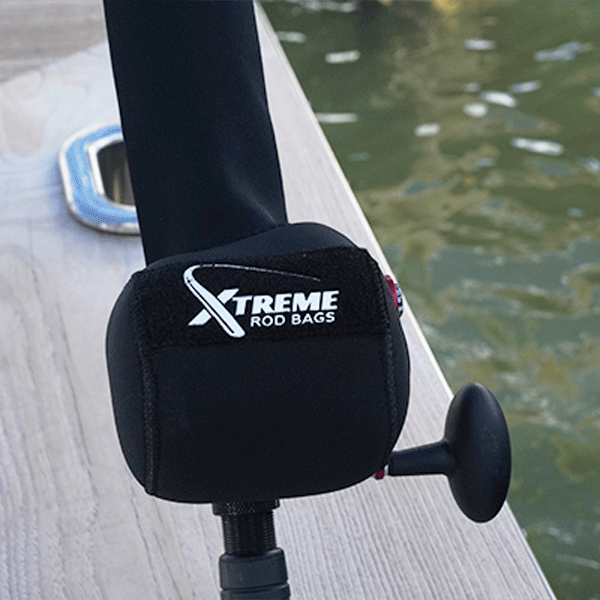
The Xtreme Fishing Rod Butt Cover is a neoprene sleeve designed to slide over the rod butt. Rod-Bags.com lists it at 15 inches long and 1 inch in diameter, with an adjustable elastic strap that fastens to the reel seat for added security. Measure the widest part of your rod butt before ordering so you can confirm the published dimensions suit your setup.
4. Secure the Cover and Control Rod Movement
A cover can only protect the intended area if it stays in place. Slide it fully over the butt, then secure its strap at the reel seat as directed. Check that the cover is not folded, twisted, or stretched over a sharp projection.
The cover is one part of the system. The rod itself should also be restrained so it cannot become a lever inside a vehicle, slap against another combo, or bounce free of a rack. Use the storage hardware already designed for your boat or vehicle and confirm that the blank, guides, reel, and handle are supported without being forced into a bend.
5. Remove, Dry, and Recheck After the Trip
When the rod has been exposed to spray, rain, or washdown water, remove the cover after unloading. Let both pieces dry before long-term storage. This is also a good time to look for new wear and clean away grit picked up during the trip.
A quick post-trip check is easier than discovering a damaged grip or loose butt cap while preparing for the next launch.
Protection by Storage Location
On a Boat
Boat storage combines close quarters with frequent movement. Rod butts may touch decks, gunwales, leaning posts, locker walls, or neighboring combos. Before getting underway, place each rod in its intended holder or restraint and make sure the butt cannot repeatedly strike a hard edge.
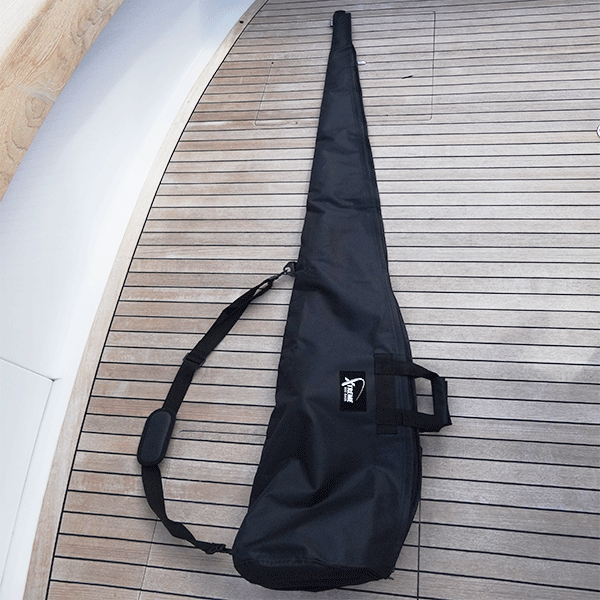
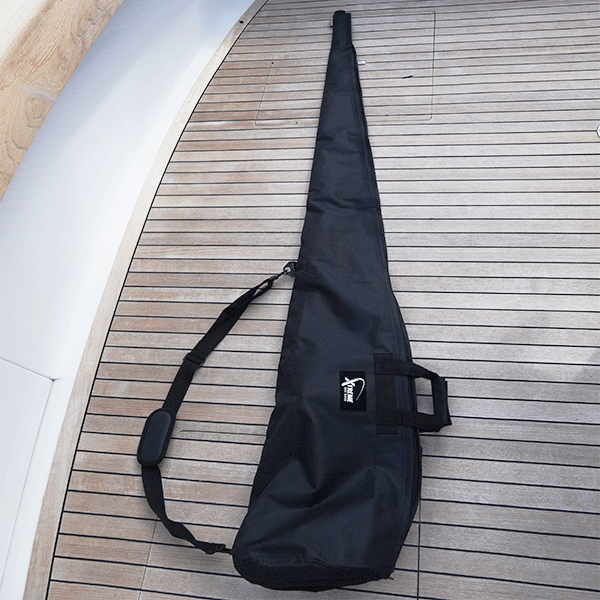
If a rod will be fully enclosed, protect the rest of the setup as well. Xtreme’s Neoprene Series includes covers sized for several rod-and-reel configurations. Choose only after checking the site’s current size information for your exact combo.
In a Car or Truck
Never rely on a pile of soft luggage to keep a rod safe. Cargo can shift during braking and turns. Keep rod tips away from doors and tailgates, separate reels and guides from hard objects, and secure the rods so they do not slide lengthwise.
When fully rigged rods must ride close together, protect their contact points and arrange all handles in a consistent direction. Avoid placing heavy gear on top of rods or using the rods to brace other cargo.
In a Garage or Gear Room
A rack is safer than leaning rods loose in a corner, but the bottom of a vertical rack can still collect grit or expose handles to a hard surface. Keep the rack clean, allow enough spacing between combos, and support rods without leaving the blank bowed.
For a complete setup, follow the steps in How to Store Fishing Rods in a Garage Safely. That guide addresses rack placement, temperature, moisture, and rod orientation, while this article focuses specifically on the vulnerable butt section.
Rod Butt Cover, End Cap, or Full Rod-and-Reel Cover?
These solutions address different exposure points. They are not interchangeable.
- Rod butt cover: Best when the handle and lower section need a buffer from rubbing, scuffing, and contact with nearby gear or surfaces.
- Built-in butt cap: The rod’s permanent end component. It protects the very end but generally does not cover the length of the handle.
- Full rod-and-reel cover: Better when the blank, guides, reel, and rigged combo also need protection during carrying, stacking, or storage.
Think in layers. Protect the butt where it contacts a surface, cover the broader combo when the rest of the rod and reel are exposed, and restrain the entire setup so it cannot move freely.
Common Rod-Butt Protection Mistakes
- Covering a wet or gritty handle: Clean and dry both the rod and cover first.
- Skipping the measurement: “Universal” does not eliminate the need to compare your rod’s widest butt dimension with the product’s published size.
- Leaving the cover unsecured: Fasten the retaining strap as designed and verify it before carrying the rod.
- Assuming padding replaces restraint: A covered rod can still be damaged if it slides, falls, or is crushed by other cargo.
- Ignoring nearby surfaces: The rod may be fine while its butt scratches another reel, rod, wall, or boat finish.
- Storing without inspection: Remove the cover periodically so wear and moisture do not remain hidden.
Quick Pre-Trip and Post-Trip Checklist
Before Transport
- Confirm the rod butt and cover are clean and dry.
- Inspect the butt cap, grip, reel seat, blank, and guides.
- Install the butt cover fully and secure its strap.
- Separate hard contact points between neighboring combos.
- Restrain the rods so they cannot slide or bounce.
- Keep heavy cargo away from rods and rod tips.
After Transport
- Unload rods before shifting heavy gear nearby.
- Remove the cover if it became wet or dirty.
- Inspect for fresh scuffs, looseness, or damage.
- Clean and dry everything before storage.
Protect the Contact Point Before It Shows Wear
Rod-butt protection is a small detail that improves the way a complete setup is handled. Clean gear, the right cover, controlled movement, and a quick inspection routine work together whether rods are going across town, across the lake, or onto a garage rack.
For a simple cover made specifically for this area, see the Xtreme Fishing Rod Butt Cover. To protect other parts of your fishing setup, browse all Xtreme Rod Bags products and match the cover to your rod-and-reel configuration.
Frequently Asked Questions
What is a fishing rod butt cover?
A fishing rod butt cover is a removable sleeve that fits over the handle end of a rod. It creates a protective layer between the rod butt and other rods, storage surfaces, or transport areas.
Do I need to remove a rod butt cover after fishing?
Remove it when the rod or cover is wet, salty, or dirty. Clean and dry both pieces before long-term storage so grit and moisture are not trapped against the handle.
Can a rod butt cover stay on in a rod holder?
Fit depends on the dimensions and design of both the cover and holder. Check clearance before use, never force the rod into place, and make sure the rod remains secure for the conditions.
How do I keep a rod butt cover from sliding off?
Use the cover’s retaining feature as directed. The Xtreme Fishing Rod Butt Cover includes an adjustable elastic strap designed to fasten to the reel seat.
Does a rod butt cover protect the reel and guides?
No. It is intended for the butt section. If the reel, guides, blank, and rigged combo also need coverage, choose an appropriately sized full rod-and-reel cover.
How should fishing rods be stored between trips?
Store clean, dry rods in a secure rack where they are supported without a lasting bend. Keep them away from foot traffic, falling objects, excess moisture, and direct contact with hard or abrasive surfaces.